Ancient Egyptian Temples: Types, Sites and How to Visit
At Karnak, you walk through a procession route built by generations of kings. At Abu Simbel, you enter a sanctuary carved into the rock. At Deir el-Bahri, terraces rise towards the sanctuary of Hatshepsut’s royal memorial temple. Each reveals a different reason the Egyptians built temples.

Use this illustrated guide to understand the main types of temples in ancient Egypt, then explore the regional directory. It brings together major temples and smaller sanctuaries that still have visible architecture. Where The Egyptologist lists a tour that includes the monument or a named part of it, follow the itinerary link. For other sites, use Plan My Trip to ask about feasibility or a related visit.
Ancient Egyptian temple highlights
Start with nine landmarks in Luxor, Aswan and along the Nile. Each card links to an itinerary that includes the temple.
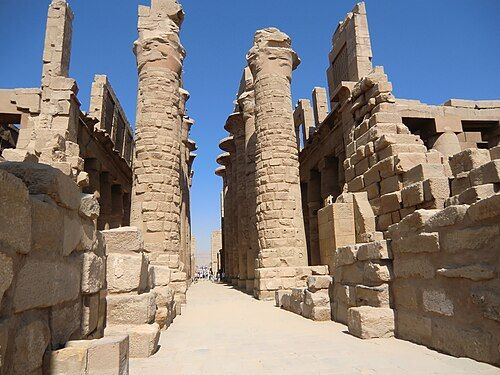
Image record · René Hourdry · CC BY-SA 4.0

Luxor, East Bank
Karnak · Great Temple of Amun-Re
The main precinct grew through many reigns. Its Great Hypostyle Hall is one of the clearest examples of monumental columned architecture.
Image record · Holger Uwe Schmitt · CC BY-SA 4.0
Luxor, East Bank
Luxor Temple
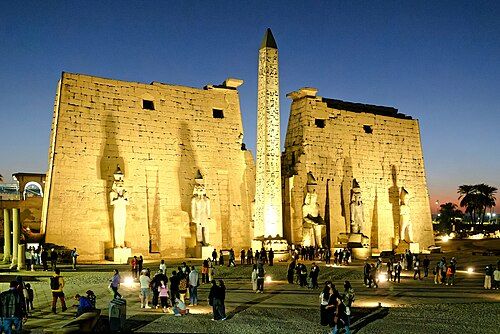
An important centre of the Opet Festival, when divine images travelled from Karnak to the Southern Sanctuary.
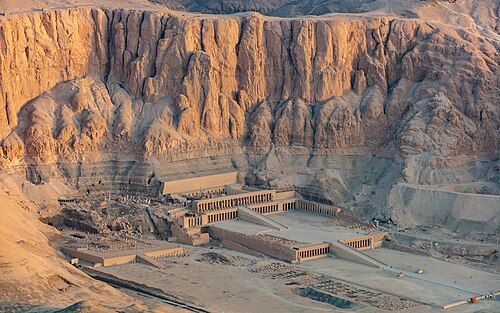
Image record · Diego Delso · CC BY-SA 4.0

Luxor, West Bank
Deir el-Bahri · Temple of Hatshepsut
Terraces set against the cliff lead to sanctuaries for Amun and other cults. The reliefs include Hatshepsut’s expedition to Punt.
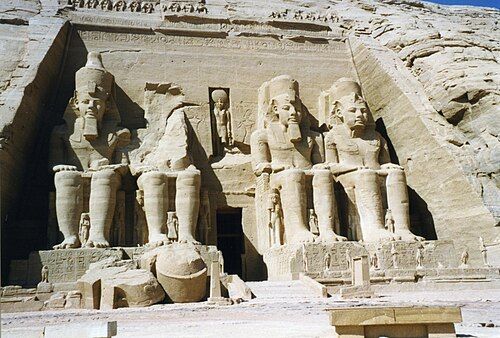
Image record · Arian Zwegers from Brussels, Belgium · CC BY 2.0

Abu Simbel
Great Temple of Ramesses II
Four colossal figures guard a rock temple whose inner sanctuary associates Ramesses II with major deities. The monument was moved uphill in the 1960s.
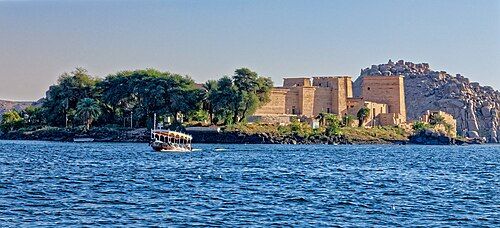
Image record · Holger Uwe Schmitt · CC BY-SA 4.0

Aswan, Agilkia
Philae · Temple of Isis
The principal Isis temple and associated buildings were moved from Philae to Agilkia during the Nubian salvage campaign.
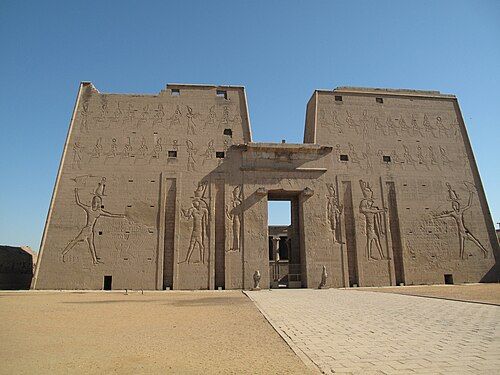
Image record · Patrick.reb · CC BY-SA 3.0

Edfu
Temple of Horus
A remarkably complete Ptolemaic cult temple whose extensive inscriptions describe festivals and ritual practice.
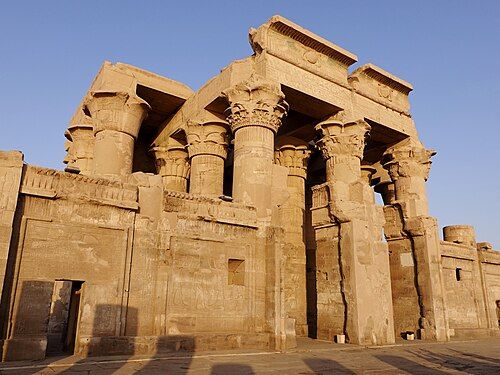
Image record · Olaf Tausch · CC BY 3.0

Kom Ombo
Double Temple of Sobek and Haroeris
The shared building has parallel ritual axes for the crocodile god Sobek and the falcon god Haroeris.
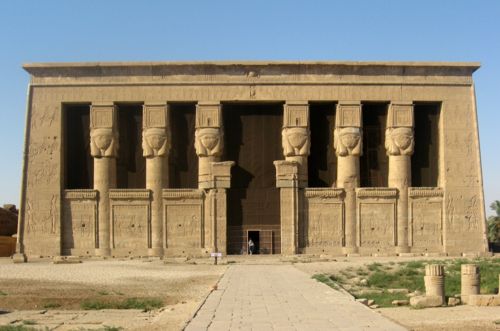
Image record · Ijanderson977 · Public domain

Qena, Dendera
Temple of Hathor
The best-preserved major temple of Hathor in Egypt, with astronomical ceilings, crypts and rooftop chapels.
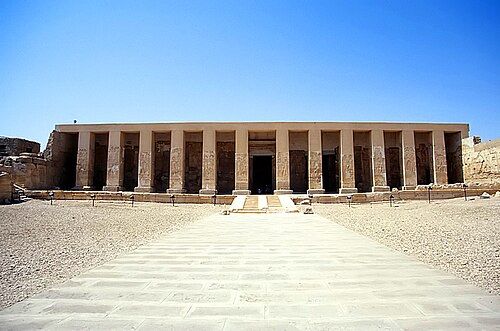
Image record · Roland Unger · CC BY-SA 3.0

Sohag, Abydos
Temple of Seti I
Seven sanctuaries and the Abydos King List make this one of the most informative temples of the Nineteenth Dynasty.
What types of temples did ancient Egypt have?
Egyptian temples housed cults, maintained offerings and made festivals possible. A temple’s innermost sanctuary held a cult image, the focus of rites performed by priests. On festival days, the god’s image could travel out in a portable shrine. Temple labels overlap. A royal memorial temple could include a sanctuary for Amun, a rock-cut temple could serve both gods and a king, and an open-air solar temple could have a valley building and causeway.
1. Divine and local cult temples
A temple could house one god, a divine family or several cults. Karnak’s main precinct centred on Amun-Re, Philae’s principal temple honoured Isis, and Kom Ombo accommodated both Sobek and Haroeris. An individual precinct could contain courts, offering rooms, storerooms, sacred lakes and satellite shrines.
2. Royal mortuary or memorial temples
These buildings sustained a king’s or queen’s cult through offerings and ceremonies. The royal tomb and the temple could be in different places. Hatshepsut’s terraced monument at Deir el-Bahri and Ramesses III’s temple at Medinet Habu show how kingship, gods and royal remembrance could share the same complex.
3. Pyramid mortuary and valley temples
Many pyramid complexes had an upper temple beside the pyramid and a lower or valley temple linked by a causeway. At Giza, Khafre’s Valley Temple preserves the massive masonry of the lower building. At Abusir, papyri reveal the practical business of maintaining a royal cult long after a king’s death.
4. Sun temples and Aten sanctuaries
Fifth Dynasty rulers built solar sanctuaries at Abu Ghurab. Nyuserre’s complex used an open court and altar. Archaeologists also uncovered substantial remains of its lower temple in work announced in December 2025. Over a millennium later, Akhenaten’s Aten sanctuaries at Amarna used open spaces and rows of offering tables for a different expression of solar worship.
5. Rock-cut temples
Rock-cut describes how a temple was built. Chambers and façades could be carved into living rock, as at Abu Simbel, Beit el-Wali and Speos Artemidos. Wadi es-Sebua shows how a temple could combine rock-cut rooms with freestanding masonry.
6. Birth houses, barque shrines and festival buildings
A mammisi, or birth house, celebrated the birth of a divine child, as at Dendera and Philae. A barque shrine sheltered the portable ritual boat that carried a divine image. Kiosks, festival halls and rooftop chapels served other purposes within a large sanctuary.
7. Animal-cult sanctuaries
Some sacred animals were associated with particular gods. At Saqqara, the Serapeum’s burial galleries received the Apis bulls. At Tuna el-Gebel, ibis and baboon burials formed part of the wider cult landscape of Thoth. The galleries and the structures used for ritual are different parts of these sites.
Further reading UCL Digital Egypt · UCL on Abu Ghurab · Egypt’s State Information Service on Nyuserre’s valley temple · Amarna Project.
How to read a temple when you visit
Start with the doorway. A pylon frames the entrance, a courtyard opens the space, and a hypostyle hall uses columns to carry a stone roof. The inner rooms usually become smaller and darker as you approach the sanctuary. That sequence is easiest to follow at Edfu. Once you know it, look for exceptions. At Kom Ombo the approach serves two cults, and at Abu Simbel the mountain itself forms the building.
Explore more ancient Egyptian temples
This regional directory adds 28 entries to the nine highlights above, for 37 in total. Every entry has a credited photograph showing surviving temple architecture. Four rescued Nubian temples now abroad are included because they originally stood in Egypt.
For the relocated temples abroad, Plan My Trip is for planning related sites in Egypt. A tour link marked site area covers the wider archaeological stop. Confirm entry to specific rooms, subsidiary structures or excavations for your date.
28 entries
Memphis, the pyramid fields & the Fayum
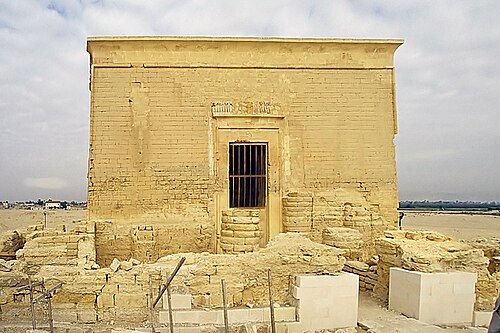
Image record · Roland Unger · CC BY-SA 3.0

Fayum, Qasr Qarun
Dionysias · Temple of Sobek
A multi-storey stone temple at the western end of Lake Qarun anchors the ancient settlement of Dionysias.
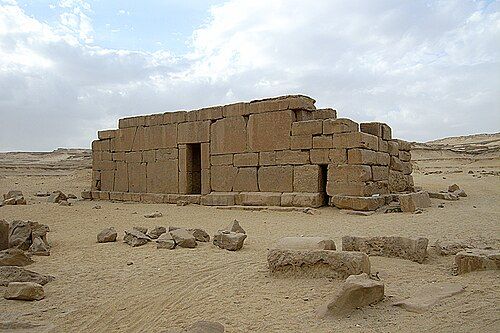
Image record · Roland Unger · CC BY-SA 3.0

Fayum, Qasr el-Sagha
Qasr el-Sagha · Unfinished temple
A small stone sanctuary with seven chambers. Its dedication remains uncertain.
Middle Egypt, Sohag & Qena
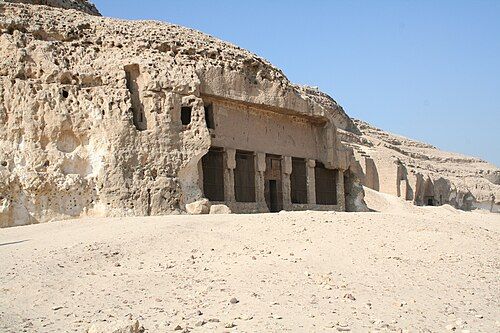
Image record · Einsamer Schütze · CC BY-SA 3.0

Minya, Beni Hasan
Speos Artemidos · Temple of Pakhet
Hatshepsut’s rock-cut sanctuary for the lioness goddess Pakhet carries an important historical inscription.
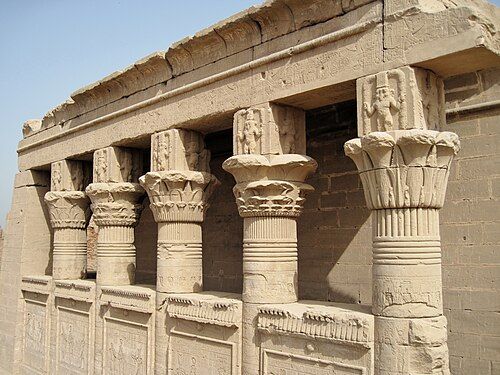
Image record · Olaf Tausch · CC BY 3.0

Qena, Dendera
Roman and earlier mammisis
Two birth houses in the enclosure show how divine birth and dynastic continuity were celebrated in dedicated buildings.
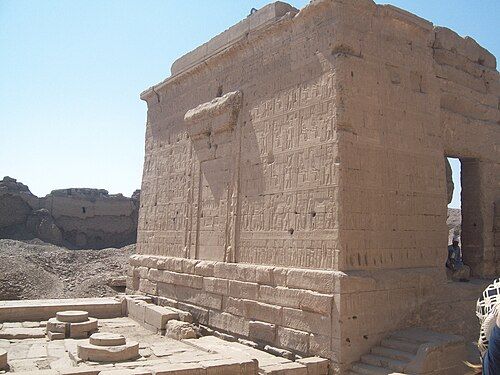
Image record · Institute for the Study of the Ancient World · CC BY 2.0

Qena, Dendera
Temple of the Birth of Isis
A separate sanctuary behind the main Hathor temple commemorates the birth of Isis.
Luxor and ancient Thebes
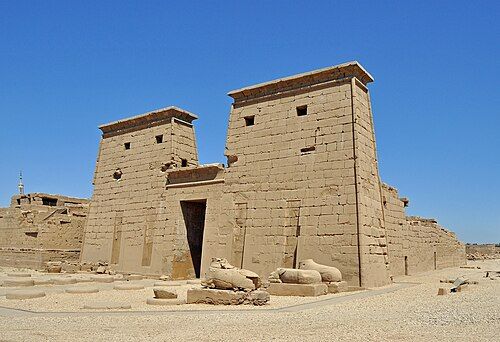
Image record · Marc Ryckaert (MJJR) · CC BY 3.0

Luxor, East Bank
Karnak · Temple of Khonsu
A comparatively compact and legible temple to the moon god inside the Amun precinct.
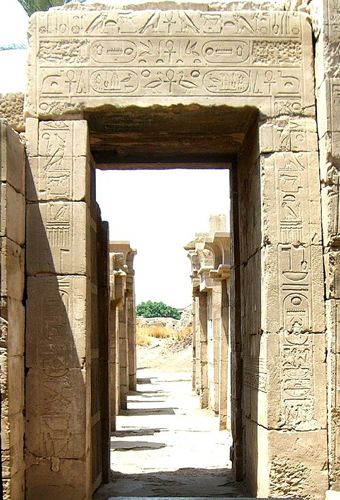
Image record · Neithsabes · CC BY 3.0

Luxor, East Bank
Karnak · Temple of Ptah
North of the central Amun temple, this smaller sanctuary was associated with Ptah and Sekhmet.
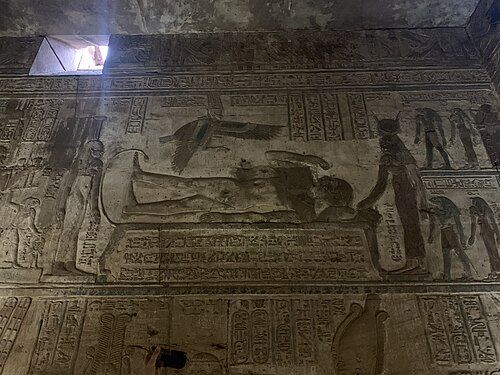
Image record · Marsupium · CC BY 4.0

Luxor, East Bank
Karnak · Opet Temple
The late temple associated with Opet stands near the Temple of Khonsu in the southwest of the Amun precinct.
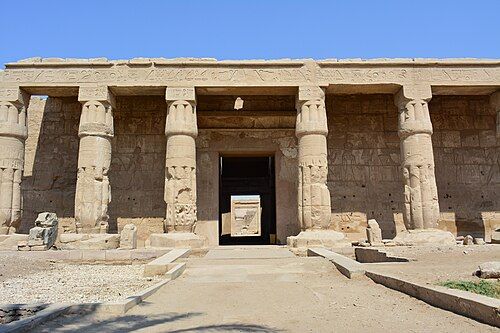
Image record · Forever Egypt · CC BY-SA 4.0

Luxor, West Bank
Qurna · Temple of Seti I
The king’s memorial temple also incorporated the cult of his father Ramesses I.
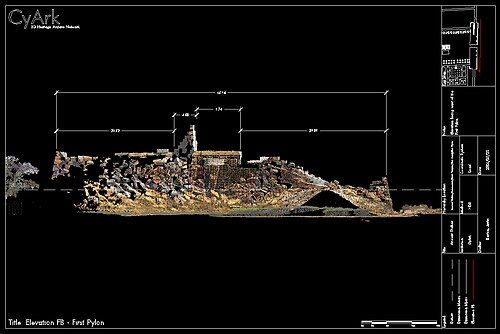
Image record · CyArk · CC BY-SA 3.0

Luxor, West Bank
Ramesseum · Temple of Ramesses II
Ramesses II’s memorial temple preserves a hypostyle hall, battle reliefs and fragments of a colossal royal statue.
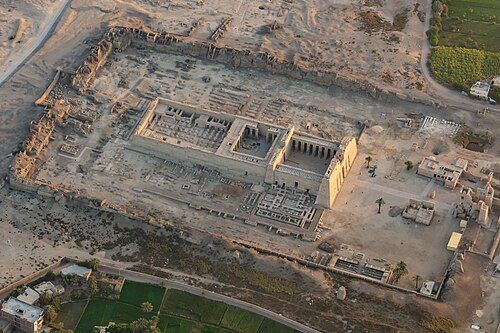
Image record · Diego Delso · CC BY-SA 4.0

Luxor, West Bank
Medinet Habu · Temple of Ramesses III
A major royal memorial temple with extensive festival, offering and military reliefs, set within a fortified-looking enclosure.
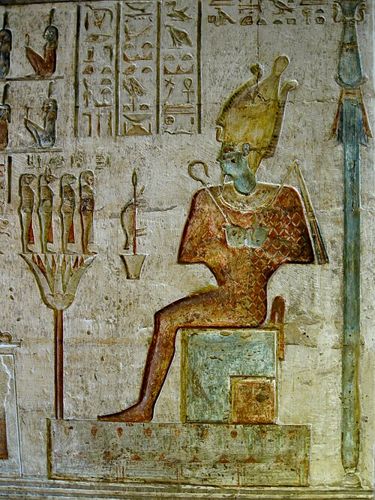
Image record · Olaf Tausch · CC BY 3.0

Luxor, West Bank
Deir el-Medina · Temple of Hathor
The Ptolemaic sanctuary at the workmen’s village honours Hathor and other deities.
Esna, Edfu, Aswan & Egyptian Nubia
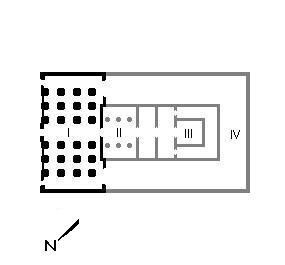
Image record · Old file: Oesermaatra0069 New file: Jean Gagnon · Public domain

Esna
Temple of Khnum
The surviving Roman-period hypostyle hall preserves columns, inscriptions and painted astronomical imagery.
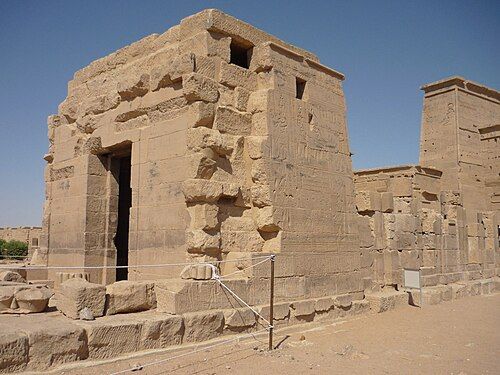
Image record · Rémih · CC BY-SA 3.0

Aswan, Agilkia
Philae · Temple of Hathor
Reliefs in the smaller Hathor sanctuary include music-making figures associated with the goddess.
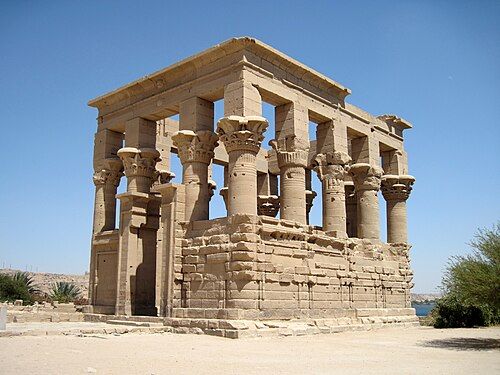
Image record · Olaf Tausch · CC BY 3.0

Aswan, Agilkia
Philae · Kiosk of Trajan
This open-sided ritual pavilion is a major component of the relocated complex.
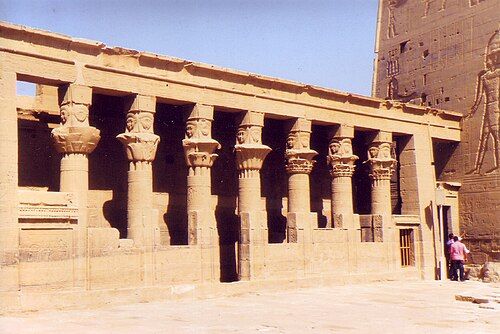
Image record · Jose Antonio · Public domain

Aswan, Agilkia
Philae · Mammisi
The birth house beside the main Isis temple celebrates the divine childhood of Horus.
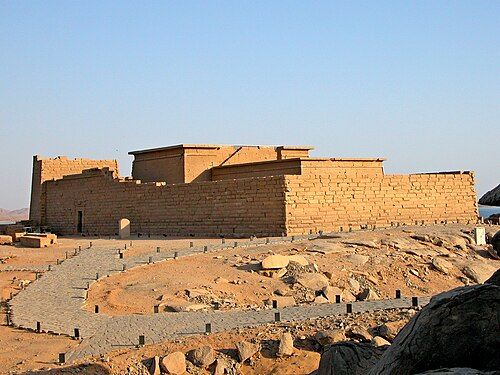
Image record · Dennis G. Jarvis · CC BY 2.0

Aswan, New Kalabsha
Kalabsha · Temple of Mandulis
Built largely in the early Roman period, the temple to Mandulis was dismantled and reconstructed near the High Dam.
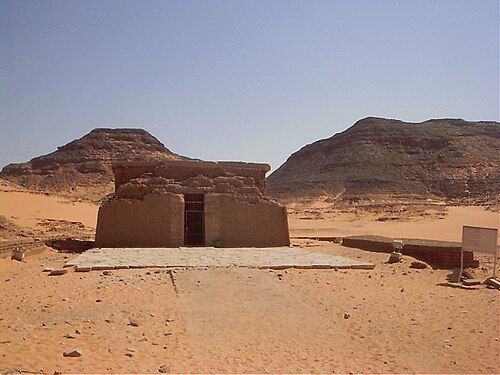
Image record · Einsamer Schütze · CC BY-SA 3.0

New Amada
Amada · Temple of Amun-Re and Re-Horakhty
This Eighteenth Dynasty temple preserves painted reliefs and early New Kingdom inscriptions.
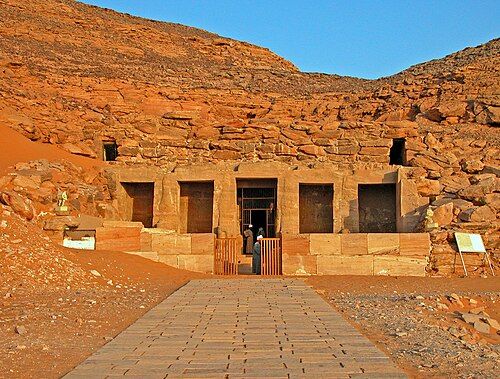
Image record · Dennis G. Jarvis · CC BY-SA 2.0

New Amada
Derr · Rock Temple of Ramesses II
The relocated rock sanctuary was built by Ramesses II and associated with the solar cult.
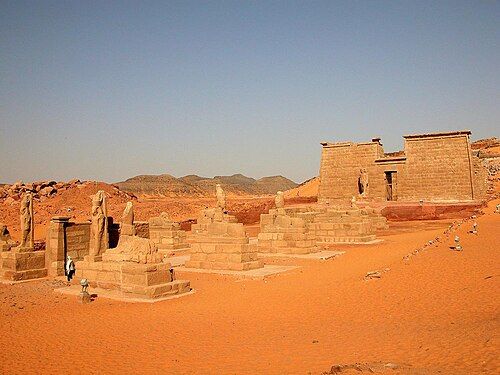
Image record · Dennis G. Jarvis · CC BY 2.0

New Wadi es-Sebua
Wadi es-Sebua · Temple of Ramesses II
A sphinx-lined approach leads to a temple combining freestanding and rock-cut construction.
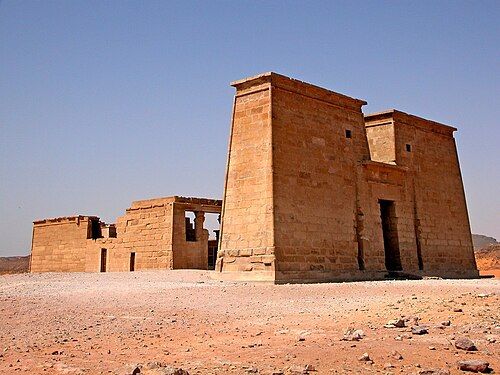
Image record · Dennis G. Jarvis · CC BY-SA 2.0

New Wadi es-Sebua
Dakka · Temple of Thoth
A Nubian and Ptolemaic sanctuary with Roman additions, moved during the rescue campaign.
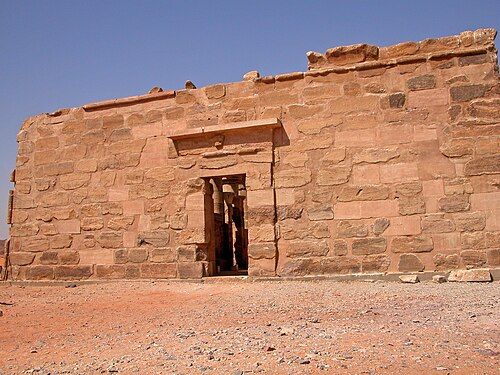
Image record · Dennis G. Jarvis · CC BY 2.0

New Wadi es-Sebua
Maharraqa · Temple of Isis and Serapis
An unfinished Graeco-Roman temple with an unusual spiral stair, relocated to New Wadi es-Sebua.
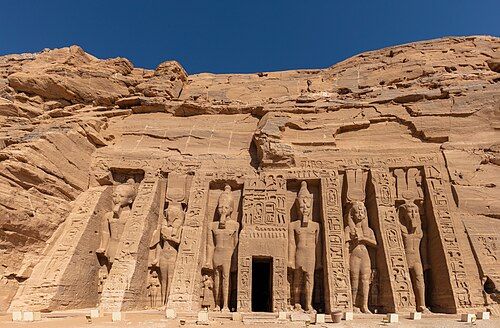
Image record · Diego Delso · CC BY-SA 4.0

Abu Simbel
Small Temple of Hathor and Nefertari
The neighbouring rock temple honours Hathor and Queen Nefertari. Her façade figures are the same height as the king’s.
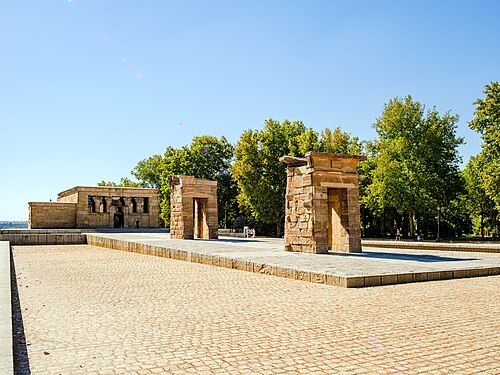
Image record · Matt Joseph · CC BY-SA 4.0

Egyptian Nubia → relocated overseas
Temple of Debod
Originally built in Egyptian Nubia. Its surviving structure now stands in Madrid.
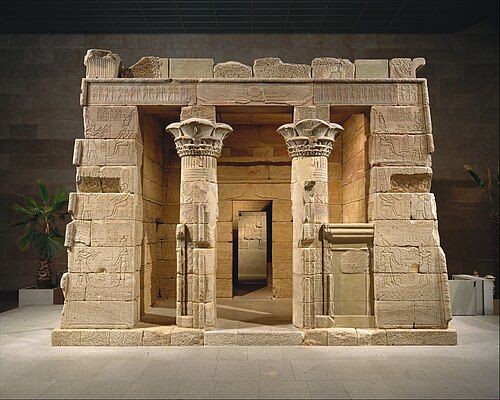
Image record · See file record · CC0

Egyptian Nubia → relocated overseas
Temple of Dendur
A Roman-period Nubian sanctuary dedicated to Isis and deified local figures. It is displayed at the Metropolitan Museum of Art in New York.
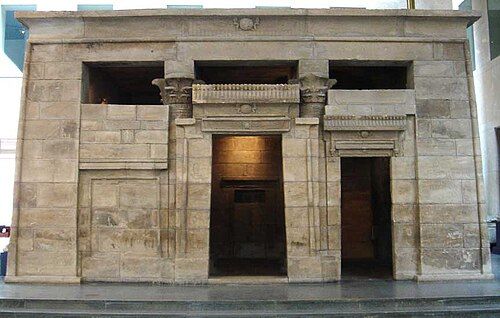
Image record · Paul Garland · CC BY-SA 2.0

Egyptian Nubia → relocated overseas
Temple of Taffeh
A small Roman-period temple now displayed at the Rijksmuseum van Oudheden in Leiden.
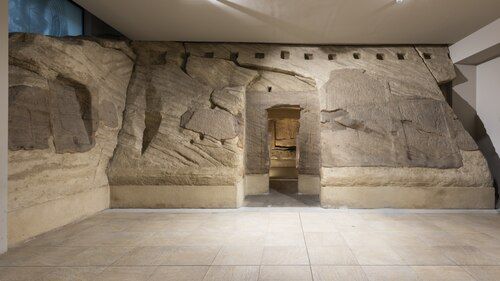
Image record · See file record · CC0
Egyptian Nubia → relocated overseas
Temple of Ellesiya
This rock-cut monument of Thutmose III was moved to the Museo Egizio in Turin.
Western Desert oases, Sinai & the Red Sea
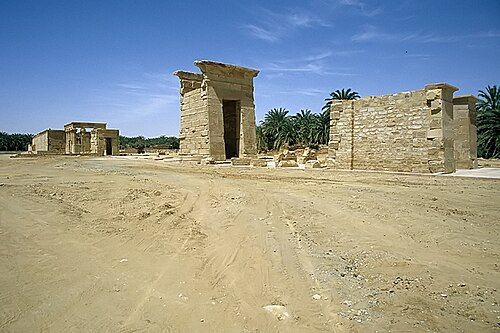
Image record · RolandUnger · CC BY-SA 3.0

Kharga Oasis
Hibis · Temple of Amun
One of the major surviving temples of Persian-period Egypt, with reliefs depicting a wide range of deities.
Egypt temple itineraries you can request
| If you want to see | Start with |
|---|---|
| Karnak and Luxor Temple | Luxor East Bank tour |
| Hatshepsut’s temple and the Colossi of Memnon | Luxor West Bank tour |
| Dendera’s Hathor temple and Seti I’s reliefs at Abydos | Dendera and Abydos from Luxor |
| Edfu and Kom Ombo | From Luxor or from Aswan |
| Philae and the two Abu Simbel temples | Philae tour and Abu Simbel tour |
| Specialist archaeology, smaller sites or temples across several regions | Plan My Trip |
Ancient Egyptian temple FAQs
How many ancient Egyptian temples have been discovered?
There is no single count used by the references for this guide. Karnak can be counted as one complex or as many temples, and a pyramid complex can contain both an upper and a lower temple. Excavations also bring new structures to light. The number in the directory counts entries in this guide.
Which temple is best for understanding the layout?
Edfu is a good starting point because you can follow the sequence from the pylon through the court and halls to the sanctuary. Karnak is a better choice if you want to see how a precinct grew over many reigns.
What is the difference between a temple and a tomb?
A tomb held or was intended to hold a burial. A temple provided a setting for ritual. In a royal funerary landscape, the two could be adjacent, as at a pyramid, or some distance apart, as on the Luxor West Bank.
Can I visit all the sites in this guide?
Access varies. Opening arrangements vary by monument. Several Nubian temples now stand in museums or public spaces abroad. For a specialist itinerary, send us the site names and your dates so we can confirm what is feasible before you make arrangements.
Archaeological references
- UCL Digital Egypt · Temple survival and archaeological site index
- Richard H. Wilkinson, The Complete Temples of Ancient Egypt · Smithsonian catalogue
- Egyptian Ministry of Tourism and Antiquities · Monument directory
- Digital Karnak · Precinct and temple overview
- Griffith Institute · Abusir excavation history
- Amarna Project · Kom el-Nana
- UNESCO · Nubian Monuments from Abu Simbel to Philae and the rescue campaign
- Berenike Temple Project · The Isis Temple